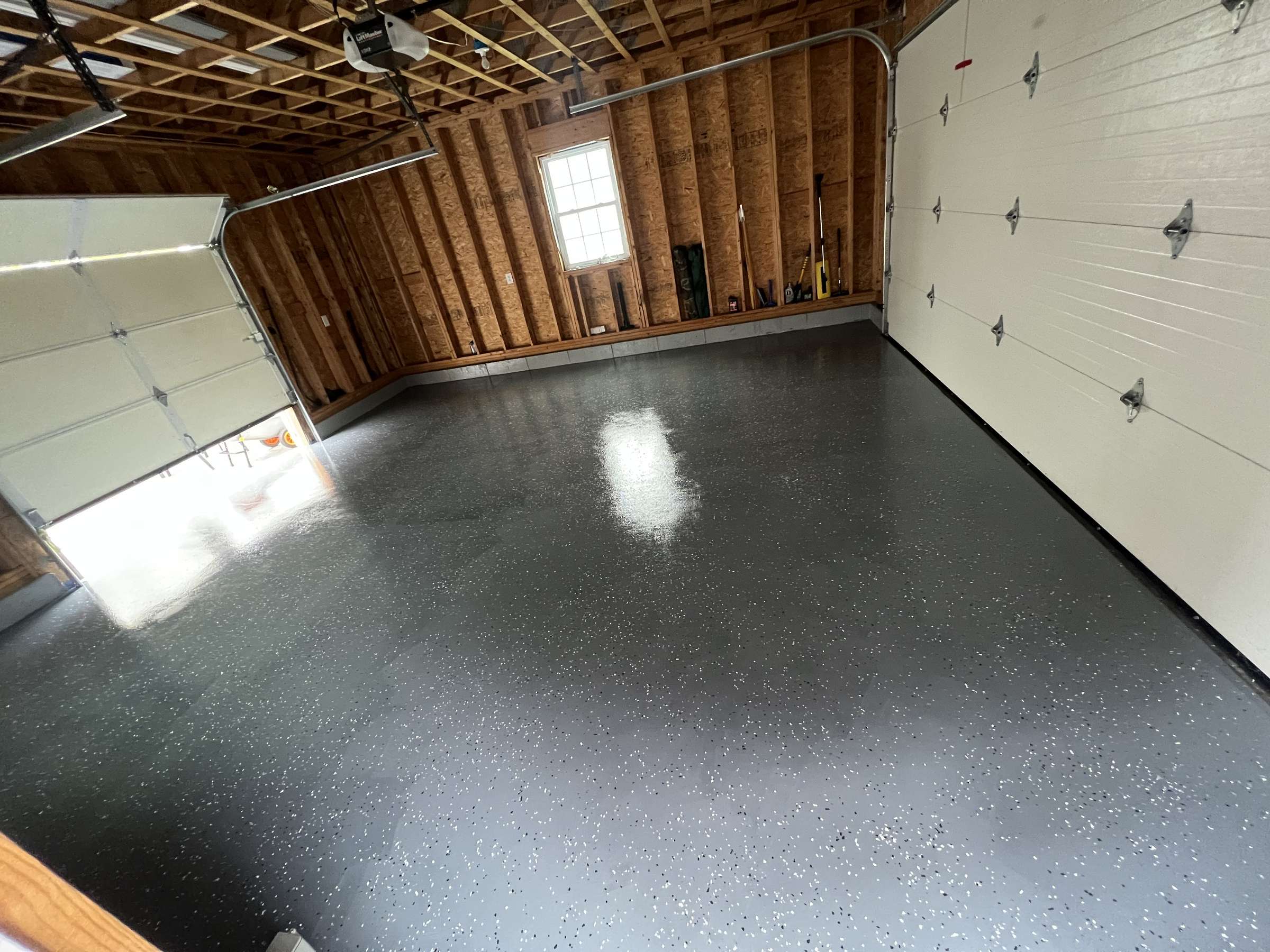
Garage Floors Engineered to Outlast New England Winters
DeJesus Concrete Flooring installs epoxy, polished concrete, and metallic coatings for garages, basements, and commercial floors across Eastern Massachusetts, all of Rhode Island, and Eastern Connecticut. Same family crew behind DeJesus Paving.
- FamilyOwned and Operated
- A+BBB Accredited
- Licensedand Insured Crew
- FreeOn Site Estimates
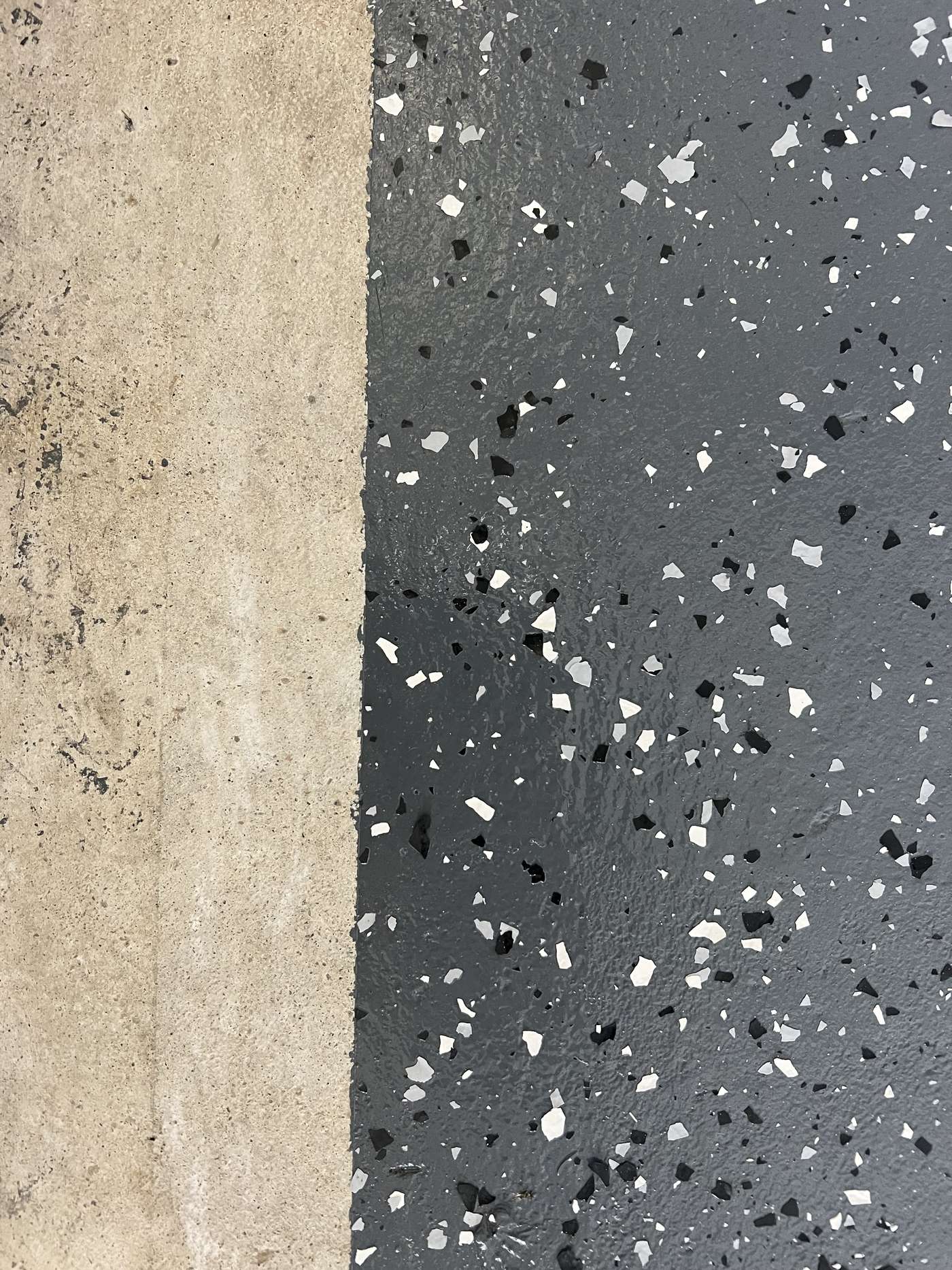 BeforeBare stained concrete
AfterFlake epoxy
BeforeBare stained concrete
AfterFlake epoxy
Bare Slab on the Left, Finished Floor on the Right
Bare concrete next to a finished flake epoxy floor. One edge, two very different surfaces. The coating is built for oil, road salt, and daily vehicle traffic.
- Finish
- Flake epoxy, glossy
- Built for
- Oil, road salt, daily traffic
- Resists
- Chips and chemicals
- Estimate
- Free, on site
Six Ways to Put a Better Floor on Your Slab
From a single car garage to a full commercial floor plate, every job gets the same surface prep, the same industrial grade materials, and the same crew standing behind the work.
Epoxy Garage Floors
Most RequestedChip resistant, chemical resistant epoxy systems built for oil, road salt, and daily vehicle traffic. Our most requested service.
02Polished Concrete
Mechanically ground and densified for a hard, reflective finish that holds up in showrooms, basements, and living spaces.
03Metallic Epoxy
Pigmented metallic systems that move and pool for a marbled, dimensional look. A statement floor for garages, basements, and showrooms.
04Basement Floors
Moisture tolerant coatings engineered for below grade slabs, so a damp basement stops fighting the finish.
05Commercial Coatings
Heavy duty flooring and line striping for warehouses, retail floors, and shop spaces, scheduled around your operating hours to limit downtime.
06Repair and Leveling
Crack repair, spall patching, and self leveling underlayment to correct a damaged or uneven slab before any coating goes down.
Five Layers From Bare Slab to Sealed Floor
Every epoxy garage floor we install follows the same build sequence, bottom to top. Skip a layer and the whole system is at higher risk of failing early.
- Layer 0101 / 05
Diamond Grind and Prep
We grind the slab with diamond tooling to open the concrete pores and remove old coatings, oil stains, and laitance so the system has something to bite into.
- Layer 0202 / 05
Moisture Vapor Barrier
Slabs that test high for vapor get a moisture blocking primer first, so trapped moisture cannot push the finish coats loose from underneath.
- Layer 0303 / 05
Epoxy Base Coat
A pigmented, high solids epoxy base coat fills pores, bonds to the prepped concrete, and sets the color foundation for the finish.
- Layer 0404 / 05
Flake Broadcast
Colored vinyl flake is broadcast into the wet base coat to add texture, hide minor slab imperfections, and improve traction underfoot.
- Layer 0505 / 05
Polyaspartic Topcoat
A UV stable polyaspartic topcoat seals the flake, adds chemical and abrasion resistance, and cures fast enough to finish the job in two days.
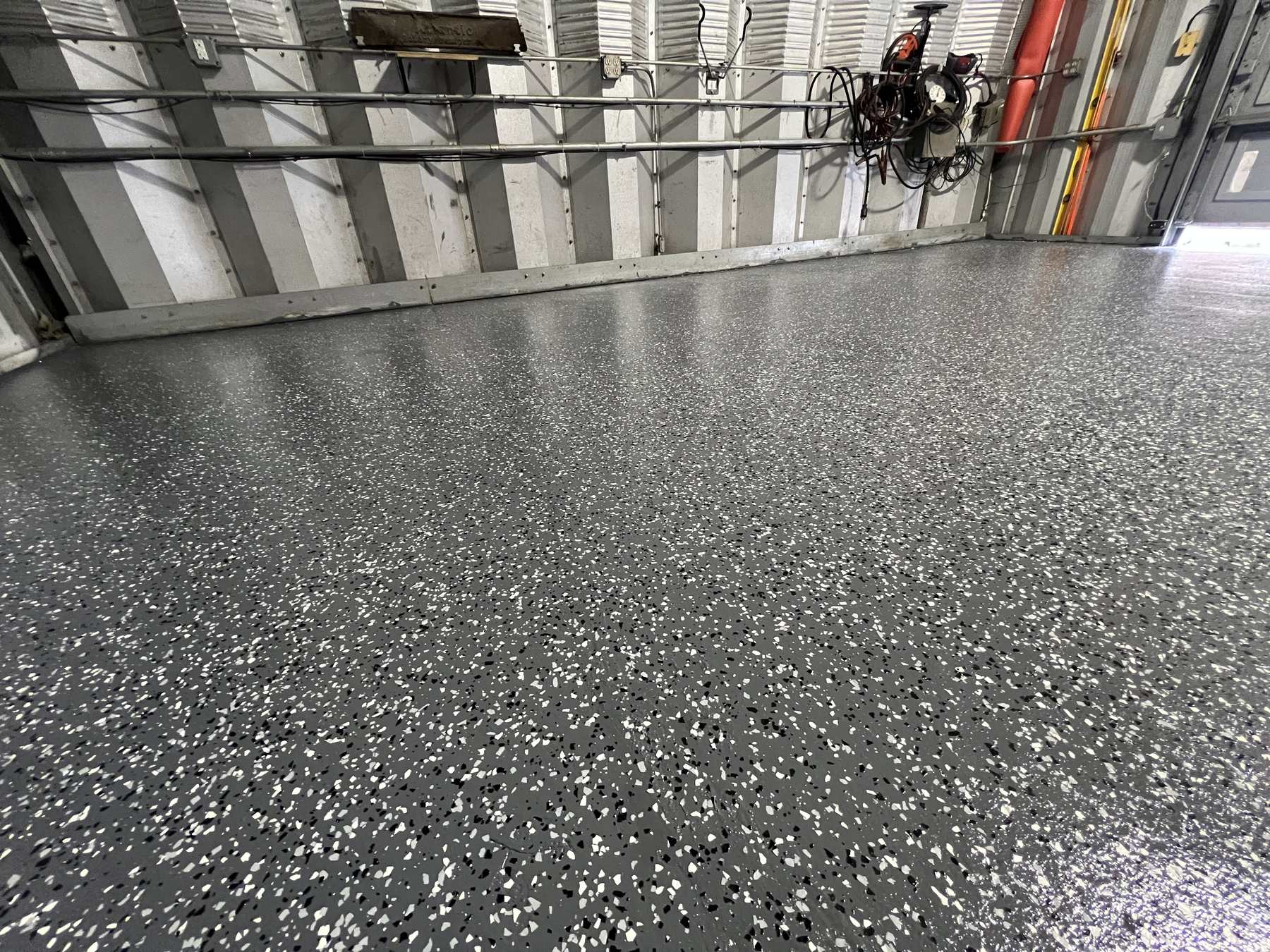 Cured and Sealed
A Floor Crew Built on the Same Standard as Our Paving Side
We are the flooring side of DeJesus Paving, run by the same family and the same crew standards our paving customers already trust.
Industrial grade epoxy and polyaspartic systems chosen to handle road salt, freeze thaw cycles, and heavy vehicle traffic.
Fully licensed and insured, with an A+ BBB accreditation behind the name on the truck.
We walk the slab, explain what it needs, and give you a real number before any work is scheduled.
Finish Swatches and Real Floors
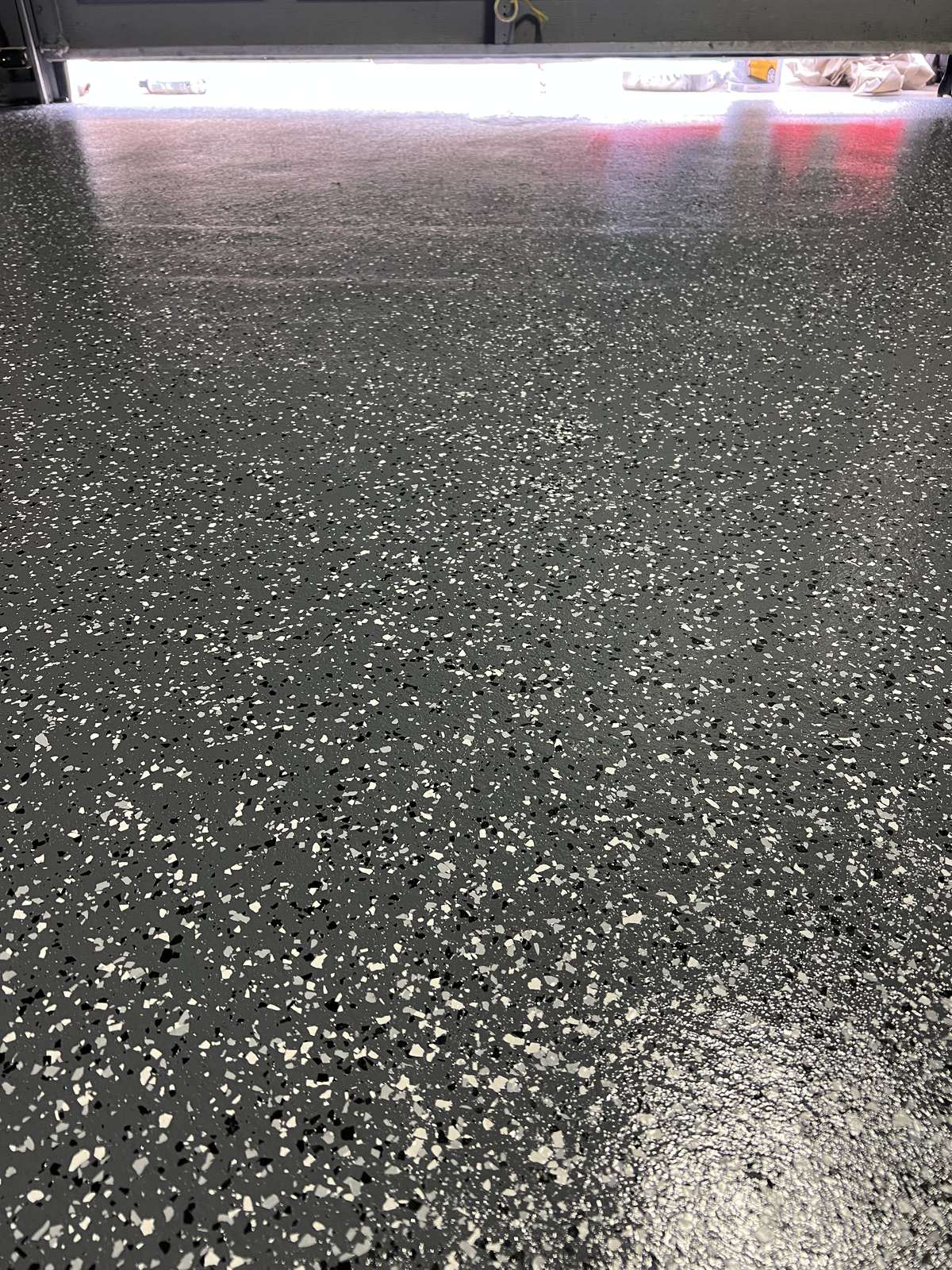
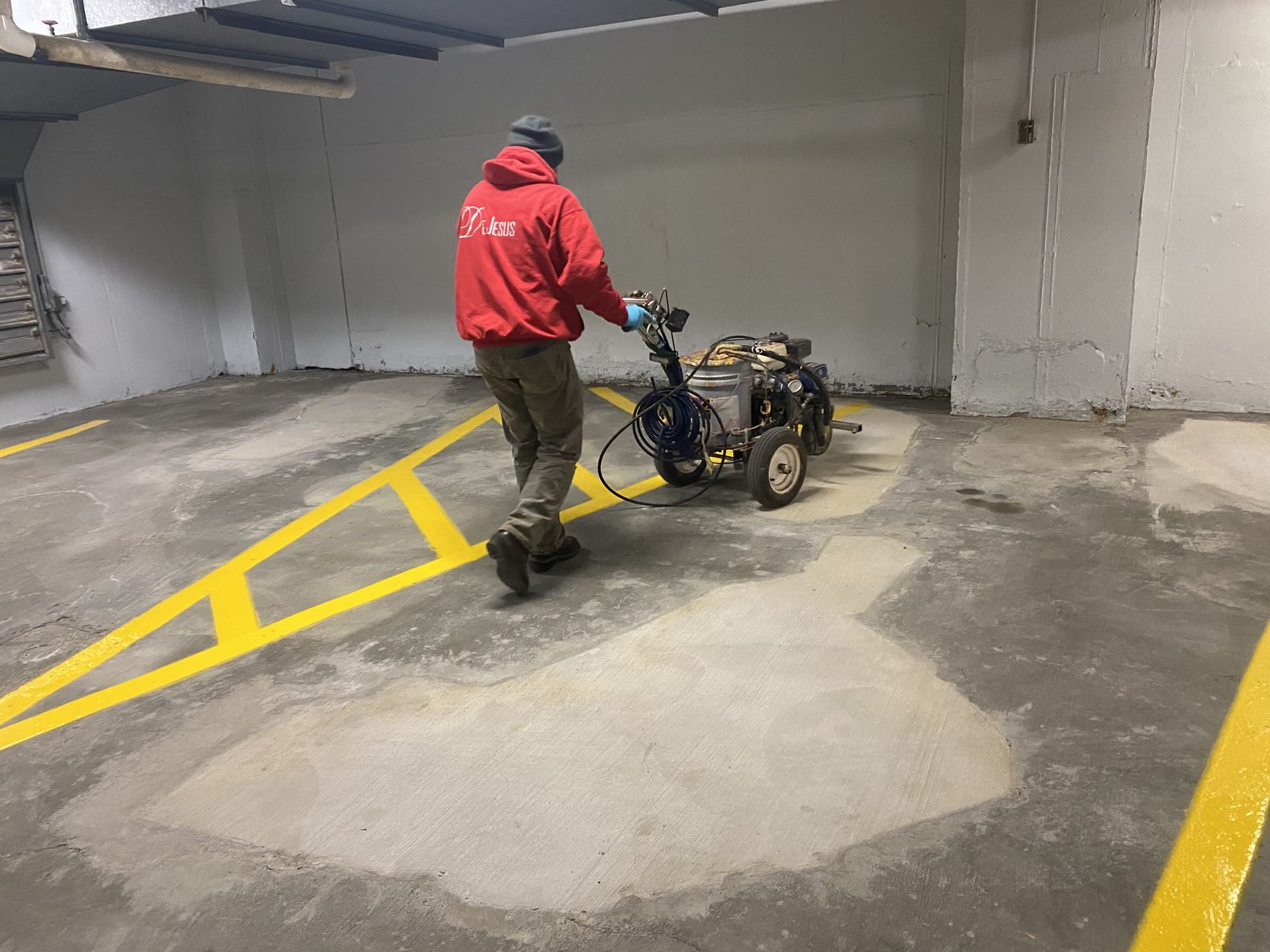
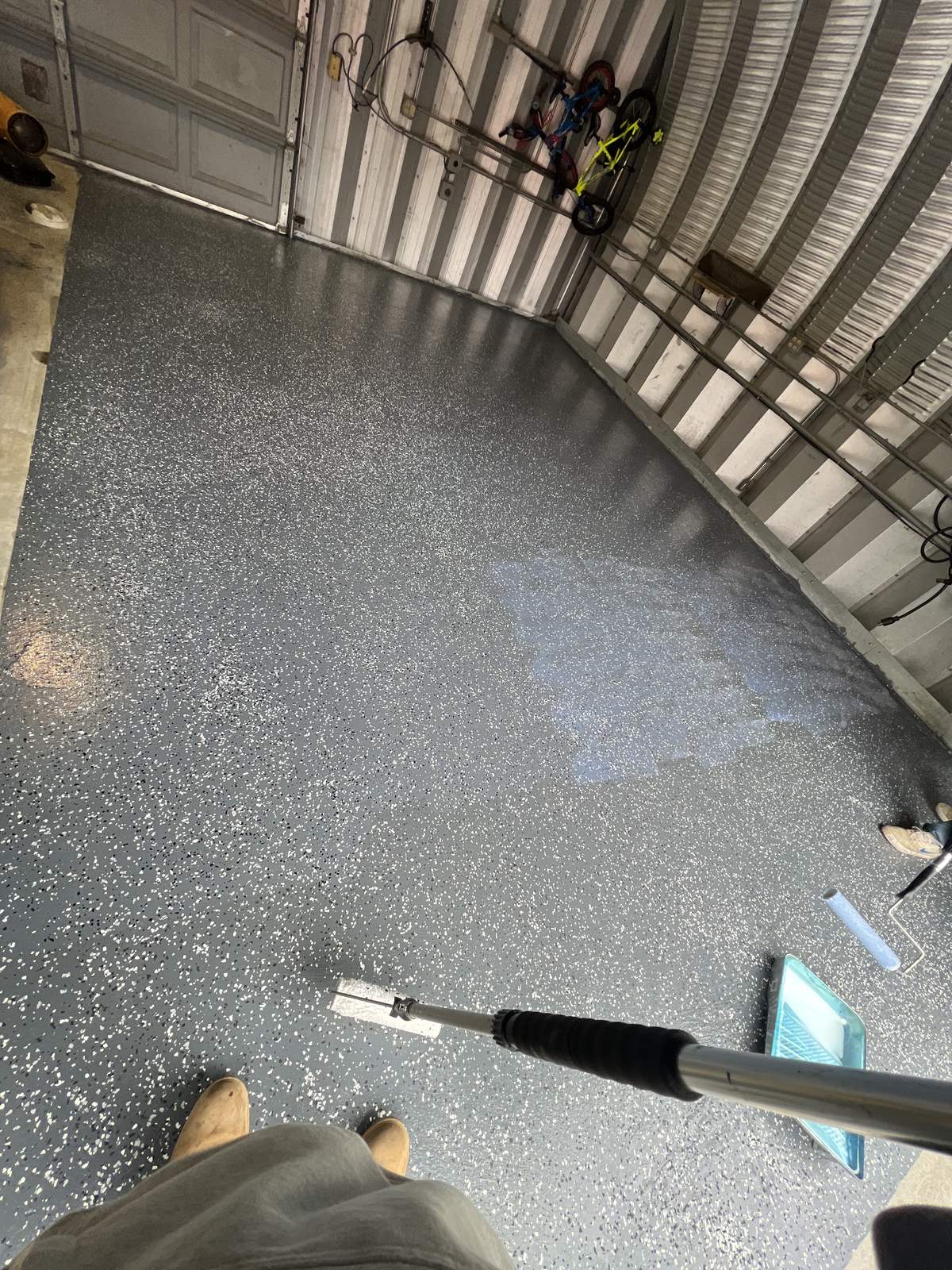
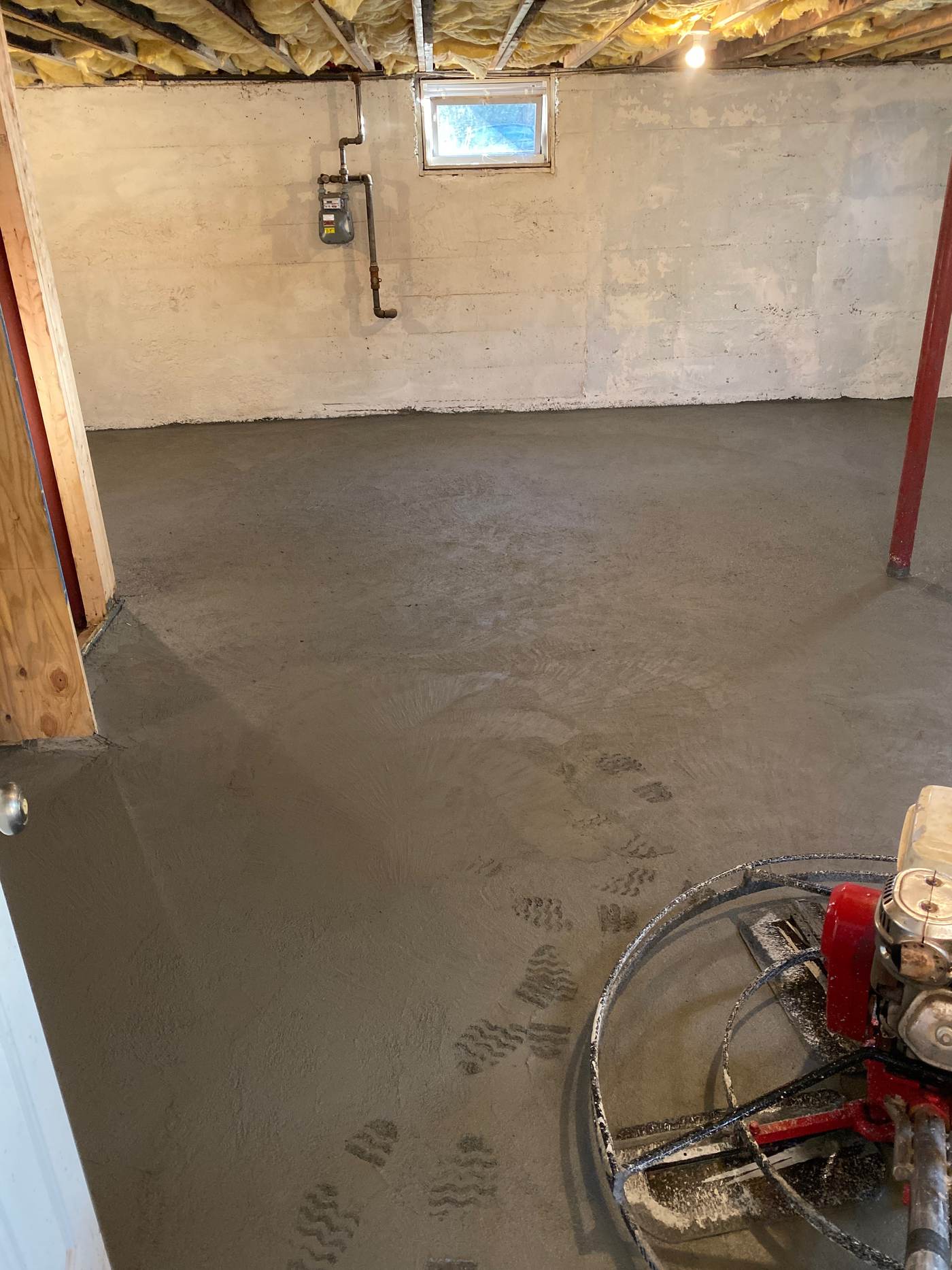
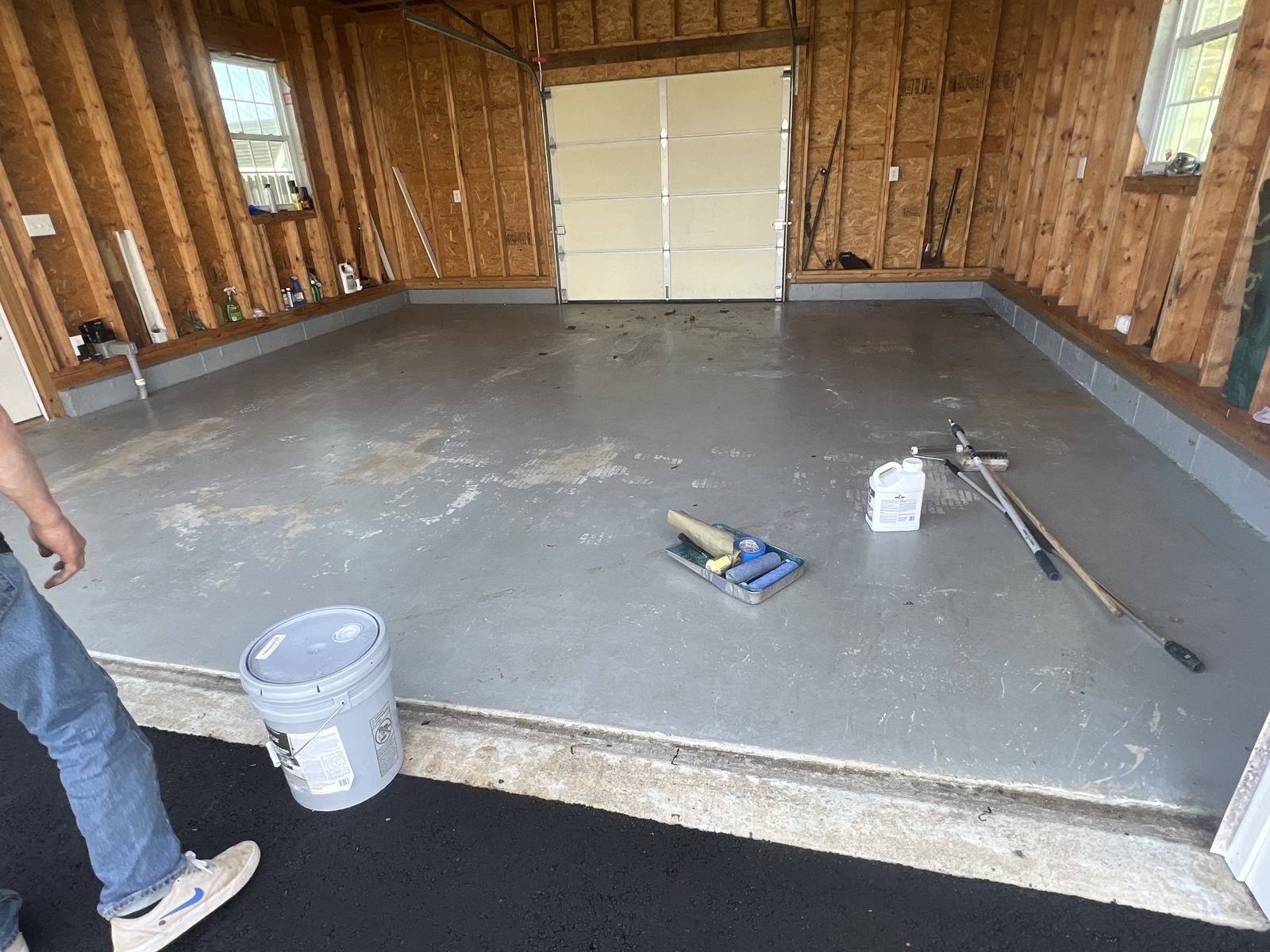
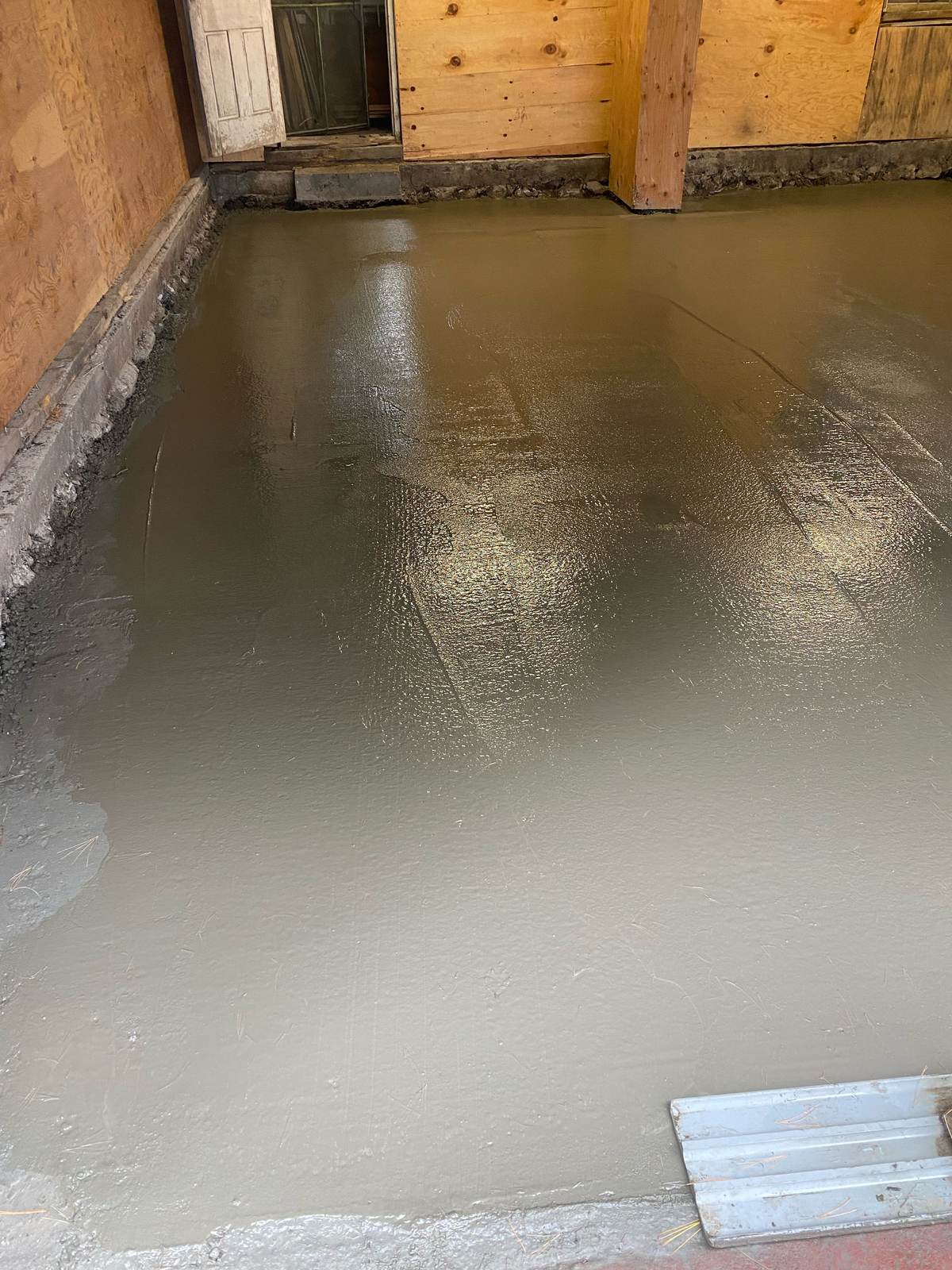
Photos of finished and in progress floors, from flake systems to fresh slabs and line striping.
Based in Swansea, Massachusetts. Serving Three States.
Our crews run jobs throughout Eastern Massachusetts, all of Rhode Island, and Eastern Connecticut. Not sure we cover your town? Call the office and we will confirm coverage. Every estimate is a real site visit: we measure the slab, check moisture and grade, and price the job before any deposit changes hands.
- MAEastern MassachusettsHome base, Swansea
- RIAll of Rhode IslandEvery town
- CTEastern ConnecticutEastern towns
Request a Free Floor Estimate
Tell us about the space and what you want it to do. We will follow up to schedule a walk through and give you a firm price, no pressure and no obligation.