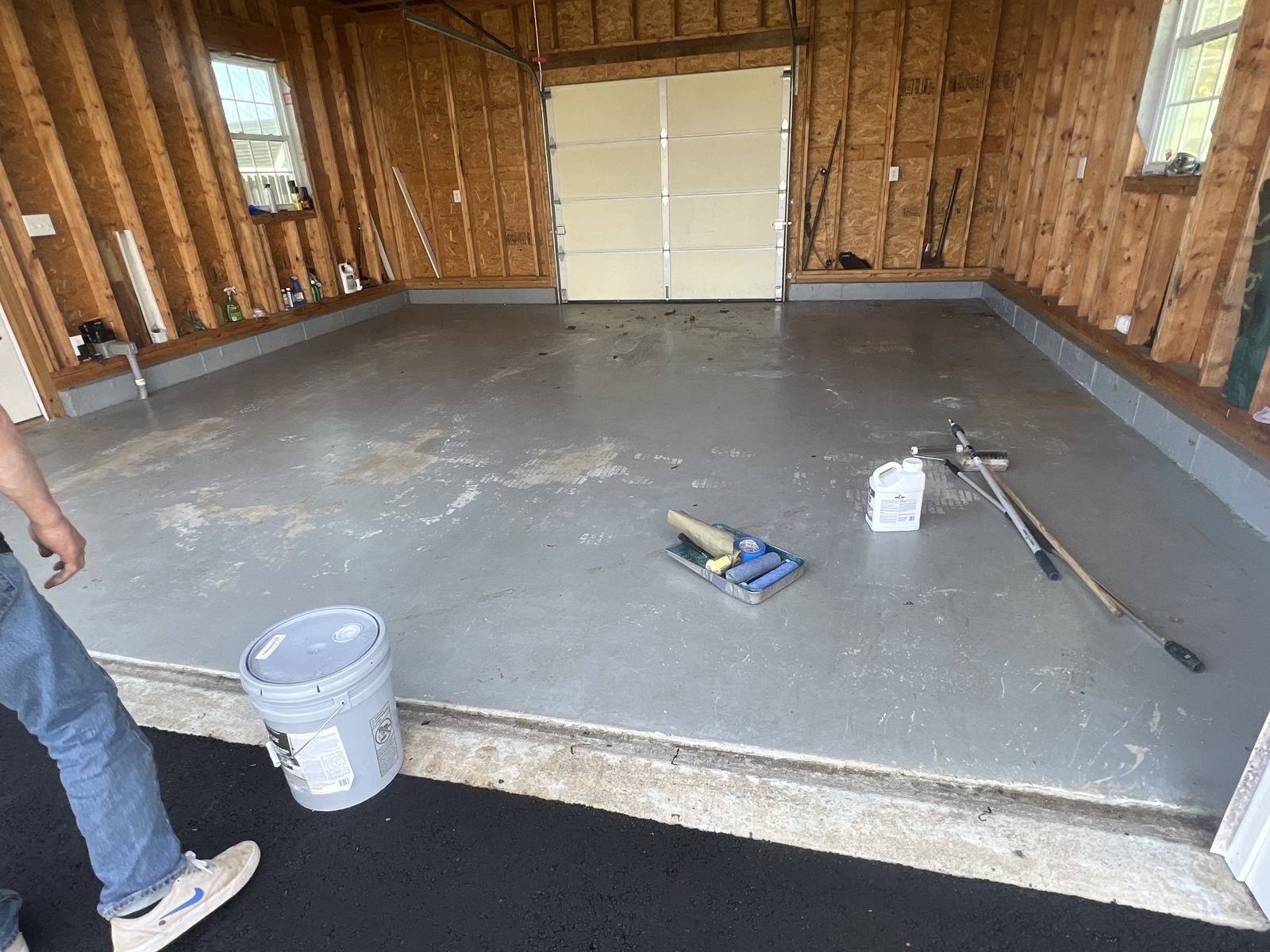
Crack Repair and Self Leveling Before Anything Else Goes Down
Chased cracks, patched spalls, filled joints, and self leveling underlayment poured flat before we ever talk finish coats. Skip this step and every epoxy, polish, or coating installed on top inherits the same problem. Same family crew behind DeJesus Paving, now fixing what is underneath the floor.
- Same DayCrack Chasing on Most Jobs
- PumpedSelf Leveling Underlayment
- Any SlabInterior or Exterior Repair
- FreeOn Site Estimates
What Gets Fixed Before Anything Goes on Top
Every repair job starts with figuring out why the slab cracked or settled in the first place. Patch it blind and the same problem comes back through whatever finish goes down next.
We check for active movement, sub base settlement, and moisture before deciding whether a crack gets routed, stitched, or opened wider for a structural repair.
Cracks are chased out to clean, sound concrete and routed into a clean channel so the repair material has a real mechanical key instead of sitting on the surface.
Spalled or delaminated concrete is chipped back to solid material and rebuilt with a bonding agent and repair mortar. Wide or failing joints get cleaned and refilled.
Low spots and uneven transitions get filled with a pumped, self leveling underlayment that finds its own grade and cures flat enough for any finish to bond to.
Read the stack from the bottom up the same way we do on site. Diagnosis comes first, because a crack caused by a failing sub base needs a different fix than one caused by normal concrete shrinkage.
That is why repair and leveling is its own line item, not an upsell tacked onto a coating quote. Get this step right and whatever goes on top has a flat, stable, sound slab to bond to.
Common Reasons to Call for Repair and Leveling
Repair and leveling work rarely gets requested on its own. Here are the situations that bring most of our calls.
Prep Before a New Floor
Planning epoxy, polished concrete, or a coating. We chase and fill every crack and pour self leveling underlayment first so the new system bonds to a flat, sound slab.
Trip Hazard Repairs
Raised joints, cracked edges, and settled slab sections get ground, patched, or leveled so the floor stops being a liability inside a home or business.
Garage and Basement Cracks
Settlement cracks, shrinkage cracks, and cold joints get routed and filled with a repair material rated for the same movement that caused them.
Pre Sale and Inspection Fixes
Visible cracking and uneven sections addressed ahead of a home sale or commercial inspection, with a clean, finished look once the work is done.
How a Repair and Leveling Job Runs
Every slab is different, so timing depends on how much cracking, spalling, and unevenness we find. This is the order the work follows on every job.
We walk the slab, test for moisture, and mark every crack, joint, and low spot before deciding what gets routed, patched, or leveled.
Cracks are chased and routed, spalled areas are cut back to sound concrete, and joints get cleaned and refilled with the right material for the job.
Low spots and uneven transitions get filled with a pumped self leveling underlayment that finds its own grade and cures flat.
Once the repair has cured, the slab is flat and sound, ready to stand on its own or ready for whatever finish comes next.
Repair and Leveling Questions We Hear Most
Will the crack just come back after repair
Not if the cause is addressed first. A crack from normal shrinkage can be routed and filled and hold for good. A crack from a settling sub base needs that movement dealt with, which is why every job starts with a diagnostic assessment instead of a blind patch.
What is self leveling underlayment
It is a pumpable cement based material that gets poured onto a slab and levels itself out under its own weight, filling low spots and smoothing uneven transitions so the surface is flat before a finish goes down.
Can you repair a crack without replacing the whole slab
In most cases, yes. Chasing, routing, and filling a crack, or cutting out and rebuilding a spalled section, is usually far less than a full slab replacement. Full replacement only comes up when the underlying structure is failing, not just the surface.
Do I need this before epoxy or polished concrete
If the slab has active cracks, low spots, or spalled areas, yes. Any coating or polish applied over an unrepaired slab will telegraph the same cracks and dips through the finish, which is why this is a separate step before the coating quote.
Do you fill wide joints and gaps too
Yes. Failing or oversized control joints and expansion joints get cleaned out and refilled as part of the same visit, so they stop catching debris, water, and hardware and can be finished cleanly if a coating is going on afterward.
Request a Free Repair and Leveling Estimate
Tell us about the cracks, joints, or uneven areas you are seeing. We will follow up to schedule a walk through, assess the slab, and give you a firm price, no pressure and no obligation.